Review: Amrut Portonova

DSC08753.jpg

I could barely finish the generous pour of Amrut Portonova I first poured. This isn't an everyday drink. The thick oaky texture was on par with Icewine. Instead, it's a drink for special occasions with flavour you won't quite experience anywhere else. 

Amrut Distillery is located in Bangalore, India. The distillery has a long history of distilling various spirits, but it wasn't until the last few decades that they started to focus on producing whisky. The first  whisky from the distillery to get international notice was the Amrut Fusion–one quarter peated barley from Scotland, the rest Indian barley–fully aged in Bangladore.  I covered it back in 2011.

The hot Indian weather changes the formula for whisky barrel maturation. Winters in Scotland and Kentucky slow down the chemical process during colder months. In India, maturation never slows, and this makes age statements irrelevant. While molecules are more excitable at higher temperatures, the humid weather means less water evaporates compared to alcohol. The results make for a different type of whisky.

While I'm simplifying the challenges of whisky making in warm climates, Amrut fully understands this complexity. Instead of producing whisky that tastes familiar to scotch drinkers, they make excellent whisky with their own character.

The distillery has the luxury of using different types of barrels over the maturation of the whisky. Amrut Portonova took a journey back and fourth between new oak barrels and barrels that were previously held in bourbon. This back-and-forth process was done to taste. The whisky was then transferred into 40 year old sherry pipes for 9 months before the whisky finally went back to the bourbon barrels again to balance out the flavours.

When tasting Amrut Portonova, one needs to acclimate with cautious nosing and small sips. The nose is surprisingly light considering the flavour, though there's plenty happening. You'll get forward dried fruits and distant burnt orange citrus, along with spice. There's a lot of new oak to this drink, such as with a well aged bourbon, and that'll become apparent on the nose. The palate accelerates in flavour. The taste starts sharp with caramel sweetness that's nearly entirely masked by the heat and spice of this drink. You'll get the expected vanilla and caramel, sure, but the peppery spice is out of this world. The sweetness evaporates off the tongue toward the middle of a taste. The finish is long, spicy, with some dried fruit.

Amrut Distillery managed to create something new with this one. This is a no-age statement whisky, and a really great example of how little age matters in the high-end whisky world.

Originally published on Spotlight Toronto

Single Malt Scotch and Chill Filtration

Whisky makers tend to obsess over the colour of their product. That’s why some whisky makers add a touch of caramel to whisky in hopes that the darker spirit will lead to more sales. With chill filtration, the goal is to produce a liquid that sparkles with colour. 

Chill filtration removes fatty acids, esters, and proteins that  clump together at cold temperatures. When clumped together, the molecules are visible in the form of a cloudy tinge. This cloudiness is especially apparent when the alcohol content is below 46% ABV. Add ice to an unfiltered bottle of scotch, and you’re likely to see it. The argument against chill filtration is simple—chill filtration removes molecules that contribute to the flavour of the whisky. Further, it prioritizes vanity over flavour. 

While this is not likely to settle the issue, a new study has concluded that chill filtration does not affect the taste of whisky. Whisky.com sent 12 whisky samples to 111 whisky experts in Germany. The samples were paired into 6 groups where one was chill filtered and the other was not. The pairs of whiskies were  otherwise identical. Not only were these whisky experts unable to pick-out which whisky was chill filtered, they ranked the paired whiskies the same for quality and flavour.

Chill filtration is more of a barometer for the character of the distillery, than the taste of the whisky. Distilleries that use chill filtration are meeting the visual expectations of a richly appearing whisky. Distilleries that do not filter their whisky tend to bottle at a higher alcohol content to an audience less likely to mix with ice. 

I will admit that I am a touch surprised chill filtration had no affect on the flavour as observed in this study. There are many important steps in the whisky making process, and this is just one. There are plenty of excellent distilleries that do and don’t chill filter. This is neither good nor bad. When it comes to this label, it tells me more about the distillery and their target audience than the flavour profile of the whisky. 

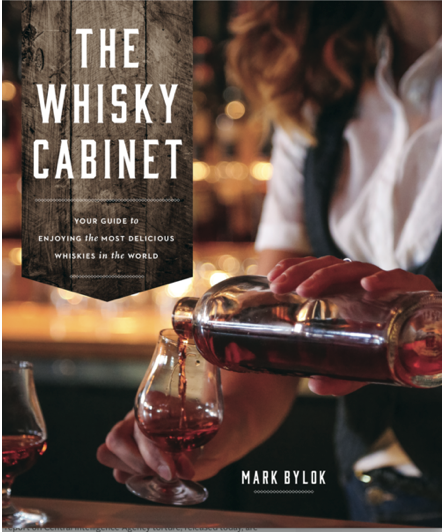
For more in-depth information on factors that affect the flavour of whisky, labels, and what they mean, order my book: The Whisky Cabinet. 

Picking The Right Tools for Writing

We place a lot of value on tools. Some tools are practical and intended on organizing your work, while other tools are intended to be inspirational. 

When I started writing The Whisky Cabinet, selecting the right tool (or tools) was important. Much of my previous writing was done on a distraction-free minimalistic writing app called iA Writer. Using iCloud, it syncs between my Mac, iPad, and iPhone. The app gives me a blank canvas without buttons, formatting, or other distractions to worry about. Its seamless syncing means I'm always staring at the same document regardless of what device I'm on. 

By freeing my thoughts of formatting, saving, and syncing, it provides for an inspirational slate for my writing. With iA Writer, my ideas take shape. Best of all, because OS X and iOS saves every keystroke as its typed, syncing is done seamlessly. I don't need to save the document, close any apps, or otherwise worry. I simply leave the computer, and turn on the app on my iPhone and the document I was working on is there. This was especially great when taking Thor to the dog park since I could continue on with my writing while he froliced with other dogs. 

tools.jpg

When I started writing The Whisky Cabinet, however, iA Writer became an impractical choice. Having the entire book as one flat document seemed crazy to me, especially when I was constantly jumping between sections of the book during writing and editing. I'd start and edit some sections in iA Writer, but all documents eventually went into a fantastic app for long-form writing: Scrivener. 

Having a system to stay organized helped immensely with a book of this size and detail. The book is broken down into three main sections, with many sub-sections within. In addition, each region (America, Canada, Ireland, Scotland, Japan, and other world whiskies) had its own folder, and each folder had an introduction section and then a list of distilleries I had or planned to review. I used Scrivener's simple flag system to mark sections as being in first draft, revised draft, or final draft. 

Having the book sectioned into folders and sub-sections, with status flags, meant I easily navigated to the section I felt like writing at that particular time. This removed much of the common challenge writers generally face in meeting with resistance to start writing. If I felt like editing, I'd look for sections that needed proofing. I can't stress enough how helpful it was that Scrivener let me sit down and work immediately. Considering I have a day-job unrelated to writing, managing my time and getting to work on my book quickly was key. Scrivener let me do this. 

The one feature that Scrivener is missing is the ease of syncing files across systems. There are ways to sync Scrivener with your iPhone and iPad, but the solution isn't pretty. Syncing between computers is made easy with Dropbox, but only one computer can have the file opened at a time. This meant I was doing some copy & pasting to iA Writer when taking documents on the go. There is, however, an iOS version of Scrivener in the works. 

Once the book was finished, and I submitted the first draft to the editor, Scrivener was no longer an option. It wasn't a file-format that the publisher worked with. They used Microsoft Word.  Scrivener compiles and exports into Word format (and a lot of other formats) nicely, so this step was painless. However, since we were using the change tracking system in Word I could not go back to Scrivener for writing. 

When you're neck deep on tight deadlines, it matters less how the app feels. Functionality wins out. This is entirely true, but apps can become a distraction. Microsoft Word is one of them. 

I use Office products on my Mac regularly as part of my day job. I'm used to the cluttered mess that's Microsoft design scheme. Originally, when making the switch away from Scrivener, I avoided using Word by choosing Apple Pages instead. It's an incredible app. It syncs between all Apple devices, the change-tracking review feature is smooth and easy to use, and it's a joy to write within. I worked on the first set of revisions in Pages from my iPad and Mac, depending on where I was. Unfortunately, the exported Word format caused my publisher issues when it came to revision tracking. This isn't a bug I was able to find anywhere online, so perhaps it was just a one-of. Regardless, Pages was no longer going to be an option because the changes were corrupting my publisher's Word file (everything looked fine on my end using Pages and Word). 

Microsoft Word is an obstacle. The fonts are wrong. The default page zoom is wrong. The buttons get messy. The review feature is functional, but unpleasant to use. For all its time on the market, Microsoft Word should be the far better, easier, and more thought-out product compared to its competition. It isn't. Microsoft Word has the appearance of an app designed by committee, rather than an app designed for writers. It pales in comparison to Pages. I'm sure Word has features that Pages does not, but for my use, none of these features mattered.

Microsoft Office cloud syncing is embarrassing on Apple, and far worse compared to Apple's iCloud. Perhaps the Windows version of Office does a better job, but on the Mac the syncing works as a mutated cross between Dropbox and iCloud. It is neither seamless, nor simple. And worst off, I didn't trust it after a few syncing conflicts. The iPad Word app is a step in the right direction, but it offers no credible benefits over Pages. Still, I needed to use Microsoft Word, and as much as I complained, the task of editing the book was finished with Word. 

Conclusion 

When writing The Whisky Cabinet, I had a series of needs that influenced my choices. They key factors were:

  • Well organized sections that I could easily move around
  •  System where I can jump-to any section quickly, and flag sections as either draft, proofed, or completed
  • Syncing between devices without worries
  • Clutter-free writing

I could have written the book entirely in Pages, but with over 200 different sections in this book, I would have been trapped in a linear world. While the same is true for Microsoft Word, the overall clutter of the interface and the messy Cloud solution made it an impractical choice for writing a manuscript. 

I'm sure many (most?) manuscripts are written in Word. George RR Martin still uses a DOS version of WordStar, and some writers prefer the tactile feel of a type-writer. Anything is possible, but my preference was toward using a platform that efficiently organized my writing. Scrivener became the core application for my writing, with an assist from iA Writer for short writing projects and for writing on-the-go.

If you'd like to learn more about whisky, The Whisky Cabinet is available for pre-order. 


Masterson's 10-Year-Old Straight Rye Whisky

Masterson's Straight Rye Whisky is one of treats I reach for on rare occasion. It's not the most expensive bottle of whisky in my cabinet--far from it--but this premium line of rye whisky that's not always easy to get.

The story of this Canadian rye crosses the boarder into the United States. A Californian company with a century of wine making decided to delve into high-quality spirits so that it could be sold along with their wine. 35 Maple Street is the spirit division of The Other Guys, which is related to the Sebastiani family in California. Master's Rye is 100% rye made at the Alberta Distillery in Calgary, bottled in California and sold through-out North America. It's considered an artisanal whisky; aged 10 years in new white-oak casks, and distilled in a pot still for plenty of flavour.

The whisky is named after the American William "Bat" Masterson that is described on the bottle as a gambler, buffalo hunter, army scout, gunfighter, and newspaperman. The name has no relationship to the whisky, but the old photo of William Masterson (along with his story) on the curved attention-grabbing bottle is a nice stroke of branding. I'm not against clever branding to get people to buy the whisky as long as the product itself is of high quality. And it is. 

Most whisky is column distilled whisky blended with pot still whisky. Column distillation is incredibly efficient, but it also cuts out much of the flavour from the grain. For a mild-flavoured smoother whisky, column distillation is excellent, but I'm biased toward whiskies with more personality. Pot stills are less efficient at distillation, allowing for larger molecules (some of which that provide flavour) to evaporate up the still and condense along with the alcohol. Pot still whisky is more expensive to make compared to column still whisky. Masterson's is 100% rye and pot still whisky, and that's represented in the price. 

Tasting Notes

The attention grabbing nose is sharp with fresh citrus, barnyard dust, and floral notes reminding me of perfume. An unripe banana might similarly perk up your senses, though this is slightly heavier with sweetness. The first sip needs to be gentle to truly appreciate this drink. It starts out as a complex tune that settles through your mouth. Vanilla flavours from the wood are so very light, certainly considering this is a 10 year old new oak aged rye. Instead, rye-based peppery spice really takes hold of your tastebuds after a few short moments. Notes of liquorice turn beneath the spice. The complexity of this drink is wonderful, and takes you through natural earthy flavours leading into a long dry finish. You'll taste plenty of peppery-spice on the end, enough to tickle the top of your throat, and as the rye sugars settle on your tongue along with an pleasant oils. You'll be left with a rewarding warmth. 

Some find 100% rye whisky too harsh on the palate, but Masterson's style is far more delicate by comparison to cheaper ryes. With so few bottles left here in Ontario, I can only hope that Masterson's will return. By the time you read this, I've likely already purchased another bottle (Or two).

Hit the Reset Button in Your Brain

Thoughts competing for resources is a fascinating look at the way our brain works.

“Every status update you read on Facebook, every tweet or text message you get from a friend, is competing for resources in your brain with important things like whether to put your savings in stocks or bonds, where you left your passport or how best to reconcile with a close friend you just had an argument with.

If you want to be more productive and creative, and to have more energy, the science dictates that you should partition your day into project periods. Your social networking should be done during a designated time, not as constant interruptions to your day.”

The Business of Blended vs Single Malts Sales

Telling paragraph from Oliver Klimek, on Diageo placing blended scotch above single malts:

Diageo ... tirelessly emphasizes the importance that blended whisky has for them, that single malts are more ore less regarded as a by-product of blending and that they are not really relevant for their business.

The entire piece is excellent, and I couldn't agree more. While Diageo owns some of the more popular names in single malt scotch, the blended whisky of Johnnie Walker is the star of their Scottish portfolio. Most Diageo's single malt distilleries are hidden behind the Discovering Distilleries website that looks more like an after-thought from 2002.

Few of the distilleries have an interest write-up online. I'm thankful that the Diageo brand group in Canada was incredibly helpful when writing The Whisky Cabinet. I was able to get the background information needed for the book.

Does Whisky Have Terroir "A Sense of Place"?

Excerpt from Mark Bylok’s upcoming book, The Whisky Cabinet, is revised as a stand-alone piece posted for feedback. 

Terroir’s definition is often simplified as “a sense of place.” Used when describing wine, the broader definition of terroir touches on the geography, geology and climate—the environmental factors that influence the way wine tastes. Less spoken of are the historical influences of terroir. While many traditional wine regions enjoy the benefits of a warm climate and rolling hills, many whisky regions are born out of harsh winters and the necessity of using and reusing local cheap grains and products. In whisky making, historical practises used out of necessity define each regional whisky. 

When it comes to wine, it’s easy to see how terroir romanticizes the notion of regional wines. Burgundy red wines are often made from Pinot Noir grapes. Burgundy Pinot Noir grown from the same genetic material is planted throughout the world, but red Burgundy remains the benchmark for Pinot lovers because it tastes unique compared to Pinots from other regions. The explanation for what makes that difference is the terroir of Burgundy. While wine and terroir are commonly brought up, it’s not the only agricultural products identified with a sense of place. Terroir is used to describe coffee, hops, tea, tomatoes and even processed products such as cheese. In fact, it makes for such an appealing story that it can often be skewed.

This is especially the case when we speak of the terroir of whisky making. Scotland, for example, has flavour profiles associated with each region. The most obvious examples are whiskies made on the island of Islay. There’s an expectation for them to be smoky. That is true of most Islay whiskies, but certainly not all. Many Islay distilleries choose to smoke their barley with peat (decaying vegetation) to keep with this regional character. 

To understand why Islay whisky is smoky, one must look at the history of Scotland. Islay is punished by a tough, windy climate that limits tree growth. Instead of wood, inhabitants of the island used peat as a fuel to cook their food. When it came to whisky making, the barley needed to be dried, and so out of necessity they turned to the cheap local fuel source peat to do it. This was true for whisky made through-out much of Scotland. 

The peat had the side-effect of smoking the barley, which gave the final product a distinctive smoky scent. Today’s Islay whisky makers use cheaper fuel sources to dry the barley, and they smoke the barley using peat and a smoker. It’s not a necessary step in the making of the whisky, but rather a decision made by the distilleries in order to produce a specific style of whisky. While much of Scotland’s whisky industry does not use peat or only lightly peated barley, most Islay distilleries have retained the traditional heavy peat since the second coming of Scotch in the 80s and 90s. 

Unlike grapes used by estate wineries, most distilleries source barley from various providers both local and distant. Many distilleries even have centralized the aging process, storing barrels off-site. There’s not a lot of terroir caused by close proximity to the distillery in Scotland, when it comes to the grains or aging of the barrels. Rarely are varietals of the grain mentioned, but distilleries do care about the grains used. Bruichladdich, specifically, comes to mind. The distillery is focused on local barley, local peat, local water and local bottling. For Bruichladdich, they spell it out clearly: “We believe terroir matters.”

Canadian whisky makers came from Ireland and Scotland. They were often traditional farmers with large plots of land. The by-product of malted grains is high on protein, and benefited their farm animals as an excellent protein-rich feed before the harsh Canadian winter. Many whisky makers also made wine, and small amounts of wine were often added to their whisky to create a sweeter, easier-to-drink product: historical terroir.

Manufacturing choices are not terroir, but when manufacturing choices were made hundreds of years ago out of necessity, and continue today out of tradition, to me that’s terroir. It is a sense of place. This is, perhaps, the best argument for peated whisky from Islay and Canadian whisky additives as being examples of a sense of place and history of the region, even if in today’s world, they are optional manufacturing choices.

There is evidence that the water used during production matters. Many Scottish distilleries talk about the way water influences their product. Initially Mike Miyamoto, master distiller for Suntory in Japan, had trouble making his whisky taste in the intended style of Scottish whisky. Japan models itself around the scotch industry, and so the end goal is to produce whisky with a similar taste profile. Mike Miyamoto was using the same varieties of grain, making and aging whisky just as in Scotland and yet when the product was ready, something was still off. After much testing, he realized it came down to the water. When water was imported from Scotland, the whisky was in the style of Scotch. This influenced Suntory to carefully choose the sources of water they use in their whisky making.

Perhaps a more obvious influence than water is the weather. Earlier I mentioned the way temperature and climate changes the chemical interactions within a barrel. Scotland has milder weather variation bringing about more predictable results, while Kentucky and Tennessee both have extremes in hot and cold weather. India’s climate is quite hot, and whisky made there will more age faster for this reason. Water and alcohol evaporate at different rates. That’s why alcohol content decreases over time; water evaporates more slowly than alcohol. Water evaporation is affected by climate—it evaporates far faster in dry climates than humid climates. This difference between evaporation rates provides its own regional challenges. It also demonstrates how terroir can be caused by climate.

In many ways, the law defining whisky is the biggest influencer on a whisky’s flavour profile compared to another whisky from a different region. Bourbon is aged in new oak because that’s what the law requires in the United States. This was initially done for economic reasons, to support coopers that were losing work in a world that had moved away from transporting everything in barrels. Single malt scotch is made of 100% barley because that’s the legal definition in Scotland, and traditionally it is made of previously used wood because trees were an expensive commodity (compared to the readily available trees in the United States), and reusing barrels was a common practice.

These legal definitions are based on the historical needs of the region. In the same way the Pinot Noir grape matured in the Burgundy climate became a benchmark, so too did the culture of whisky making in the different regions. When one looks at terroir from this historical point of view, there is absolutely terroir in whisky making. The regions are far larger, and often based on legally defined borders, but that sense of place is there.

As an example, American whisky is made with corn because that’s the predominant crop grown in the region. Single malt whisky is made of barley because while there are cheaper crops that grow in Scotland, whisky made with barley is more suitable to whisky making when barrels are reused. Canadians started adding rye to their whisky because it was cheap to grow in Canada, and it ended up adding a unique flavour profile that differentiated it from American whiskies at the time. Japan, while modelled after Scottish whisky, could only replicate a similar flavour by using similar bodies of water in Japan.

Wine drinkers often scoff at there being terroir in such a manufactured product as whisky. Today’s whisky industry is well controlled, sourced at a distance and legally defined. Rarely do historical influences make it into wine terroir discussions, but this is the mistake made in these discussions. In wine, history is less of a differentiating factor. In whisky, however, history has greatly influenced the drink we enjoy today.

Taste bourbon, single malt scotch, Canadian whisky, Irish whisky, and Japanese whisky. The borders are broader, but the sense of place is achieved. Whether or not you’re interested in specific regions of whisky, you can delve deeper into what makes those regions unique and enjoy them for their sense of place.

 

Pappy Van Winkle - Elusive, but with alternatives

The elusive nature of Pappy Van Winkle is part of its charm. Pappy Van Winkle is released in such limited quantities that a bottle listed at $300 will sell for three or four times that price. More importantly, it's almost impossible to find unless you know someone, or happen to be at the right place at the right time. The one time I enjoyed a full sampling of Pappy Van Winkle was entirely by chance, when the bar I happened to be at did a one-night-only flight tasting. 

For those that have had Pappy Van Winkle, they often mention that it is a rare smooth quality to the whisky not common in many bourbons. To be considered a bourbon, American whisky needs to have corn as its first ingredient (51% minimum). Corn gives the bourbon the thick, sweet notes. Most bourbons have rye as their second ingredient. Rye adds spicier tones to a bourbon that are predominant toward the middle and finish of a taste. Bourbons are often made up of around 10% rye, but rye-heavy bourbons (such as Bulleit) have up to 28% rye. Malted barley is the third ingredient, and it's used to aid fermentation. 

In place of the rye, Pappy Van Winkle's second ingredient is wheat. Wheat tends to mellow out the drink, bringing balance to the sugars of the bourbon, and cuts out much of the spice.  In terms of tasting, wheat smoothens out the middle of the palate just after the initial sip and before the finish. For those that find rye too harsh, wheat is an excellent alternative. 

Pappy Van Winkle is not the first wheated bourbon, but it shares a lineage with the first. W.L. Weller makes the claim of being the original wheated bourbon. The company started as a whisky reseller, and later W.L. Weller distilled their own alcohol. A salesman by the name of Julian "Pappy" Van Winkle worked for W.L. Weller, and eventually he purchased the company along with a co-worker in the early 1900s.

Julian Van Winkle released Old Rip Van Winkle wheated bourbon for the first time in the late 1910s. The whisky was distilled by W.L. Weller, and was considered a premium product from W.L. Weller's standard wheated bourbon. Unfortunately, prohibition put a quick stop to Old Rip Van Winkle bourbon when all whisky production halted in the United States. 

While W.L. Weller changed ownerships and rebuilt after prohibition, the Old Rip Van Winkle brand was largely dormant (with a few exceptions) until later in the century. W.L. Weller whisky continued to be distilled in the Stitzer-Weller distillery up until 2002. Buffalo Trace (its newest owner) moved all production to the Buffalo Trace Distillery, and closed down the Stitzer-Weller distillery at that time. All new releases of W.L. Weller whisky have since been made at Buffalo Trace Distillery. 

Before closing the old distillery, the last of the distilled alcohol from Stitzer-Weller distillery was purchased by the Van Winkle family (among others). This remaining supply of whisky goes into Pappy Van Winkle 23 (though likely not true for much longer), and it is the only original Pappy available from the the now-closed distillery. Otherwise, the rest of today's Pappy Van Winkle product is said to be distilled at Buffalo Trace distillery in agreement with the Van Winkle family. 

To put simply, Pappy Van Winkle was born of W.L. Weller's wheated bourbon. The mash bill (the ratio of corn, wheat, and malted barley) for Pappy Van Winkle is likely identical to that of W.L. Weller's 12 Years Old bourbon. The marketers will tell you that W.L. Weller gets rejected Pappy Van Winkle barrels. In all likelihood, Pappy Van Winkle barrels are aged at premium parts of the warehouse where conditions are warm enough to keep the whisky aging even through Kentucky's winters. This added maturation gives the whisky a smoother texture.  

These factors affect the quality of the drink. So does the alcohol content of the drink. Pappy Van Winkle 15, for example, is cask-strength whisky--it's not watered down. W.L. Weller's 12 Years Old is watered down to a respectable 45% ABV. W.L. Weller is sometimes referred to as "Poor Man's Pappy" because of its similarities. There are some that claim that mixing W.L. Weller 12 Years Old and W.L. Weller Special Reserve will give you a similar profile to Pappy Van Winkle 15. You can google for various recipes, though only W.L. Weller 12 is currently available at the LCBO. 

While Pappy Van Winkle is impossible to get, W.L. Weller 12 Years Old is available at the LCBO for $44.95. Aged for a minimum of 12 years, W.L. Weller is an excellent buy for the price (sidenote: this is even truer in the US, when you can find it for under $30 a bottle). It's made from the same distillery, using the same recipe (likely), and it is aged only 3 years less as compared to the Pappy Van Winkle 15. 

How does W.L. Weller 12 Years Old taste? On the nose there are familiar bourbon, vanilla and caramel notes, but there's a nice dusty hay sort of scent that comes through. If you dig a little too deep, you'll get leather-polish notes. On the palate, the drink is surprisingly complex. The wheat tempers the heavy sugars, providing for a nicely soft but interesting drink. It begins with light caramel, with the sugar mingling lightly on the tongue. The spicy notes are there, and they draw up through into the finish with a nice balance from the oaky sugars. For those that find bourbons too forward-facing on flavour, W.L. Weller will hit the spot. 

W. L. Weller isn't your only option for wheated bourbon. The original Maker's Mark and Maker's Mark 46 are both wheated bourbons. I'm especially a fan of the 46, which uses staves within the barrel to provide more oak surface area as the whisky ages. The results are excellent, especially if you like a deep oaky bourbon. The Heaven Hill distillery releases wheated bourbons under the Old Fitzgerald label (which actually has a history going back to W.L. Weller as well), but few of these make it into Ontario. 

It's hard to call Pappy Van Winkle over-rated. Rare luxury items are impossible to compare to their more available counterparts. From my brief tasting of Pappy Van Winkle, the 15 Years Old one wins out for me. Pappy Van Winkle 15 perks the palate by tempering the caramel and vanilla-forward flavours found commonly in most other bourbons. The longer-aged Pappy Van Winkle bottles take on too many oaky-vanilla notes, erasing any hint of wheat. They taste more like an old bourbon than a wheated bourbon, and while that's not a bad thing, it's a miss for me because the wheat is no longer being expressed.

I have no plans buy Pappy Van Winkle for my whisky cabinet. W.L. Weller 12 Years Old is a far more affordable and available. Maker's Mark 46 has the thicker mouth-feel that you'd find in Pappy. Both of these are relatively affordable at the LCBO. Comparing the two, Maker's Mark 46 wins out for me for its younger more chaotic nature, but W.L. Weller 12 Years Old is a welcomed addition to my cabinet as a smoother more mature wheated bourbon. 

Three Ships Whisky

The problem with most affordable (cheap?) blended scotch comes from the utterly boring base flavour. While single malt scotch is made strictly from malted barley, blended scotch is mixed with distilled corn and possibly wheat. The result is a cheaper drink, with a dull vanilla flavour that's common among many brands in the $30 range.  

With the introduction of Three Ships at the LCBO, I may have found my "cheap" drink. It's not a scotch, but it is a South African distilled whisky that has been blended with whisky from an unmentioned distillery in Scotland. The blend of Scotch whisky with South African whisky is no gimmick. There's a light smokiness present here that no-doubt comes from Scotland.

The whisky has been aged at minimum of 5 years. While that's young for a Scottish whisky, in South Africa the climate is significantly warmer. This hastens the chemical process of whisky maturation compared to the cold climate of Scotland where aging is near dormant during the cold winters. Faster isn't always better. Different components (water, alcohol, etc..) evaporate at different rates and the wood is less challenged by warmer climate, but in the case of this blended whisky, the results are fantastic. 

I've put this drink up against many single malt and blended scotches of double the value in a blind taste test, and this whisky enters the category of 'Not quite as good as these others, but damn it's good!' At half the price for nearly as good of a product, this drink is an easy favourite. The praise from my blind tasting with friends is not unique. Three Ships has been earning many awards internationally including praise from Jim Murray of The Whisky Bible. 

Three Ships Whisky has a history going back to 1850 when Captain James Segwick landed in South Africa. By 1859 he started a company in his name that provided liquor and tobacco to the area. In 1886, he purchased the distillery in Wellington South Africa located about an hour outside of Cape Town. The distillery has since been upgraded, and currently there are over 70,000 casks of whisky maturing. 

As mentioned, Three Ships 5 Year Old Blended Whisky is a blend of Scotch and South African whiskies in combination of malted barley and grain whisky, which could be wheat or corn. While the distillery is vague on the details, we can assume that the slight peatiness comes from Scotland. It's nice to see this drink bottled at 43% ABV. For me, when a distillery bottles at a higher alcohol content, often they're demonstrating their faith in the strength of flavour of their product. While 40% ABV is the minimum for whisky, too many distilleries see this as the default alcohol content. 

Tasting notes:   

The nose starts with mildly charred wood for peat, with the brightness of a freshly peeled orange, and some raisin-like sweetness. If you wait long enough, you'll get shoe polish notes.  

On the palate, the flavour hits immediately with sweet notes of caramelized orange peel and a touch of vanilla. Just as you think you'll settle down for a normal blended whisky, nice levels of oaky spice ramp up. There's an almond fattiness to this drink, and while the complexity builds up, the charred wood smokiness settles down through the middle and fades nicely into the finish. The finish is a combination of peat, spice, and dark chocolate. If there's any complaint, it's the bitter notes that come out the longer you wait. 

By many standards, Three Ships whisky is not going to be as good as blends double the price, but it's quite possibly close enough that you won't care. The LCBO has a limited supply of Three Ships Whisky. I recommend stocking up.

Distillery Review - Forty Creek

Forty Creek Distillery has deep roots in winemaking, with a passion for whisky. Recently I had the pleasure of doing a private tour of the distillery that included a tasting of the full product line.

To mention the history of the distillery is really to speak about the owner and whisky maker, John K. Hall. A native of Windsor, Ontario with a passion for whisky, Hall grew-up dreaming of working for the local distillery, Hiram Walker. When it came time to start his career, things didn't work out as he envisioned. Instead he received an opportunity to pursue his other great passion, winemaking. Hall would spend 20 years as a winemaker, but as much as Hall loved winemaking, his first love was whisky. So when he heard Reider Distillery in Grimsby planned to close he cashed out his shares in Cartier (where he worked) and bought the distillery renaming it Kittling Ridge Estate Wines and Spirits.

As a winemaker with a lifetime of experience in Niagara, he continued to produce wine, but his true love was whisky and his childhood dream was something he couldn't deny. The whisky business, however, is hard to get into. Unlike wine, which can be ready in as little as a year, a good whisky requires six or more years of aging. Hall ran both businesses in parallel, but is currently going through what he describes as the bittersweet process of de-emphasizing and likely divesting his wine business. It's something you can literally see on the building as the signs and the company have been recently rechristened Forty Creek Distillery—indicating that going forward the focus is all on the whisky.

Forty Creek has a loyal following, and for good reason. Hall takes his knowledge as a winemaker and applies it to whisky. For example, in winemaking there are three noble international red grapes: Cabernet Sauvignon, Merlot, and Cabernet Franc. Winemakers are able create some of the most revered wines in the world by making them separately and then carefully blending them together with an artistic touch. Hall sees a similar parallel with whisky having three noble grains: corn (used in bourbon), barley (used in Scotch), and rye (traditionally used in Canadian whisky).

All Forty Creek whiskies use all three grains. Hall distills each separately and treats them differently during the aging process, charring the barrels from light, medium to heavy depending on the grain. He believes this approach allows him to bring out the best in each grain, and he doesn't blend them until the last stage when the whisky is 'married' in a barrel for at least several months before being bottled. It's a very unique approach in the whisky world. American Bourbon distillers begin their whisky making process with a mix of grains (mostly corn with some wheat and/or rye and/or malted barley) called a mash bill and Scotch distillers use only malted barley. Hall explains that if he made his wine with that approach, fermenting a mix of different grape types altogether, the result would be muddied with the wine never reaching its full potential. Tasting through the line-up with him, you begin to understand why he goes through the extra effort of trying to coax the best out of each grain before blending.

I had the pleasure of doing a deconstruction of the whisky, tasting barrel samples of each of the three grains, and it proved his point. Each of the single grain whiskies are expressed uniquely in the final blend. The corn-based whisky offers a thicker, creamier, more interesting mouth-feel; the rye adds a fruitiness and a longer spicier finisher; and finally, the barley adds citrus and nutty notes.

I also did a full tasting of the Forty Creek whisky line-up, and while there's a range of flavour, the one consistent element is the finish. It is, in each case no matter the price-point, a long and fulfilling finish. This, for me, is what separates the greater whiskies from the regular ones. It's also something he works hard to achieve. “I don't think a whisky should bite you back,” he said, “I want something that softly captures your heart.”

Forty Creek whisky is widely available at the LCBO. The original, award-winning whisky, is the Forty Creek Barrel Select ($25.75), which takes the blended whisky and finishes it in sherry caskss for up to six months. New to the line is the Copper Pot Reserve ($28.45), which is blended heavier on the rye and makes for a flavour profile closer to a 'traditional' Canadian whisky.

When walking through the large barrel warehouse (it holds 20,000 barrels), I noticed a few that had "Hold for John" written across them. Hall noses barrels for two or more hours a day, and occasionally he finds a barrel that peaks his interest—those are marked “Hold for John”. These barrels are later used in his reserve line of limited edition products, and are typically released annually.

The Forty Creek Confederation Oak Reserve Whisky, is one of those and it's currently available at the LCBO ($69.96). This special edition Forty Creek is finished in barrels made from 150-year-old Canadian white oak trees sustainably harvested from a forest near the distillery. Hall explained that the trees have a denser wood grain due to the colder Canadian climate, offering a unique Canadian terroir.

Forty Creek has a fantastic story behind the whisky, and a whisky maker that's truly passionate and obsessed with making a fine product. It's something you can experience yourself taking one of the complimentary tours and tastings held at the distillery from June to September. “I didn't set out to make just another Canadian whisky,” Hall said. After spending an afternoon tasting with him I can confidently say he succeed.

Note: Originally published on Spotlight Toronto

Black Bull 12

Duncan Taylor is an award winning independent bottler in Scotch, and the maker of Black Bull Blended Scotch. I had a chance to visit them earlier in the year, not realizing at the time that their rather modestly size bottling facility was among the largest among Scottish independent bottlers.

Independent bottlers purchase barrels of whisky from distilleries. They then age these casks in their own facilities, and bottle the product based on when they feel it is ready. Bottlers like Duncan Taylor have a wide range of Scotch available. They have barrels from most of the large distilleries, and they also have barrels from distilleries that have long-since closed. Duncan Taylor specifically is said to be one of the largest private owners of whisky casks, including barrels of Scotch that are over forty years old.

They're also the maker of the award winning Black Bull 12 Year Old Blended Scotch Whisky. While single malt Scotch must be 100% malt barley, blended Scotch is typically part malt barley, and part grain, offering a smoother, sweeter whisky. In the case of Black Bull 12, the blend is 50% malt and 50% grain. While sweet, it is also bottled at 50% alcohol.

Black Bull quickly became a favourite go-to in my whisky cabinet, so much so that its quantity has declined quickly since my purchase. I have a feeling this will have a regular appearance in my whisky cabinet (Sidenote: As with most products I seem to review, this one is also on the 'limited supply' list at the LCBO).

So how does it taste? The nose is a little sharp, but quite welcoming with milder notes of vanilla, cereal, and caramel. The latter scent reminded me of a light bourbon. On the palate the nose carries through with similar flavours, but with more depth. There's a nice spice to the drink, and you can taste the woodiness. The palate is heavier with caramel and dried fruits, and the finish is long and sweet with a touch of bitterness. As mentioned, it is bottled at 50% but I don't feel that is obvious when drinking it.

Green Spot Irish Whisky

Green Spot Irish Whiskey is a surprising and fantastic addition to the LCBO’s shelves. This is a premium Irish whiskey*, and that's reflected in the price of $84.95.

It's the type of Irish whiskey that I like to see: one that fights the (incorrect) stereotype that Irish whiskey is only a cheap alternative to single malt Scotch. Irish whiskey has the reputation for being a cheaper alternative because of the grains they use. Single malt scotch is limited to malted barley by law, whereas Irish whiskey is typically a blend of malted barley and other grains. This makes it closer to blended Scotch over single malt Scotch. Just as there are fantastic blended scotches, there are also fantastic examples of Irish whiskey.

Read More

Top Canadian Chefs Host Congress Dinner in Scotland

I've toured Scotch distilleries before, but when touring Balvenie Distillery with top Canadian chefs, the tour became more about the senses. Chefs taste everything. Even as we stood on the malting floor (where barley is dried), the Chefs were reaching down, scooping up the barley and tasting it. The tour became more about the taste and smells, the art behind the craft in making scotch, and less about the technique.


The Chefs were asked to take inspiration from our tour and create a meal the following day based on the craftsmanship used to make a bottle of Scotch. Balvenie Distillery was the perfect distillery for the tour, as it is among the few that still keep all elements of Scotch craftsmanship on-premise. As an example, the malting facilities (which served as inspiration for the meal) have long-since been outsourced to third parties by other distilleries.

Read More

Booker's Kentucky Straight Bourbon

Booker's Kentucky Straight Bourbon is a cross between a whisky cabinet novelty item and a drink to be taken seriously. The novelty part comes from it being one of the (if not the) highest alcohol content drinks you can buy in US and Canada (63.4%).

On the other hand, it's a bourbon to take seriously because the distillery manages to succeed in bringing flavour to an otherwise overpowering combination of alcohol and barrel aging.

Read More

Whisky Drinking Tips for Wine Drinkers

Note: Originally published on Spotlight Toronto

When writing about whisky for Spotlight Toronto, I make the assumption that many readers are predominantly wine drinkers who are whisky-curious. These are some tips I picked up along the way that can help in the appreciation of whisky:

1. Swirling is unnecessary

Although swirling any liquid inside the glass is fun, this isn’t necessary when it comes to whisky. In the case of wine, you swirl to produce more aroma because of the slow rate of evaporation and to encourage oxidation. In the case of whisky, it needs no oxidation and it is already evaporating at a quicker pace. There should be plenty on the nose without the swirl since whisky needs no additional encouragement to evaporate.

2. When nosing a glass, don’t take a deep breath

With wine you nose aggressively, but if you do so with whisky you’ll just get hit with the sting of alcohol. People ask me how I get ‘caramel’ nosing a 60% drink, but the trick is to take the barest whiff. The best thing to do is to hold your glass close to your nose, and let the aroma come to you. Breath in slowly, naturally, and let your sense of smell do the rest. Whisky is a strong drink; you need a gentle nose to get the full range of smells and flavours.

3. Warming the whisky makes it milder

As they say, the right way to drink whisky is whatever way it taste best for you. However, I suggest that instead of using ice, next time try simply holding the glass for five or ten minutes with the whisky already poured. Let your body temperature naturally warm the liquid. It’ll take the edge off of a young whisky, and open up additional flavours. Between warming and icing a glass of whisky, warming will make it milder without losing any flavour from dilution. Taste the whisky every little bit to see how the flavour changes, because if it’s too warm it might take too much edge off. There’s a reason why whisky drinkers take their time with a good drink. In this way, each drink will be different, and have an ideal temperature for your preferences.

4. Shorter sips are best

The higher the alcohol content, the shorter your sips should be. You don’t need to add water to your drink since saliva will naturally dilute the alcohol in your mouth. However, if you take even a half-size gulp (compared to wine) no amount of saliva will save you from a cask strength drink. Take shorter sips, and let the whisky wash over your tongue. The saying goes (though I’m far too impatient to follow this), keep the drink in your mouth one second for every year it has been aged.

5. Have the right glass

Although whisky can be enjoyed in any glass, the best glasses to appreciate the full flavour range of whisky is in ‘tulip’ shaped glasses. These narrow off at the top reducing the evaporation and concentrating the aroma. Glencairn glasses are the favourites amongst Scotch drinkers. Villeroy & Boch also produce a single malt whisky glass that takes more of the shape of a stemless wine glass, but is thinner and narrower at the top. Even a small wine glass will do. You’ll usually get whisky in a straight tumbler style glass in a restaurant, and that’s fine for casual enjoying, but switch to a tulip shaped glass when enjoying a drink at home.

Amrut Fusion

I've been wanting to feature the Amrut Fusion on the Whisky Cabinet since I first had a taste last year, but it just kept selling out far too quickly from the LCBO shelves.

This shouldn’t be tooo surprising: Amrut Fusion was rated the number 3 whisky worldwide by Bill Murray (author of the annual Whisky Bible, not to be confused with Ghostbuster/Zombie Bill Murray). What is surprising is the distillery location: Bangalore, India.

Read More

Glenfiddich Whisky Tasting at Allen's On Danforth

John Maxwell, owner of Allen's, was the ever meticulous host presiding over a rather special lunch in honour of Ian Miller – Glenfiddich Global Ambassador and a true gentleman of the industry. The talk of the day was of Scotch and Ontario wine, and considering what we were about to be served, I rarely have felt as spoiled as I did that day. 

Upon Miller's arrival, Maxwell produced an old bottle of Grant's Best Procurable Scotch, a bottle stored in his cellar for quite some time. Miller helped date the bottle (since none was printed) to sometime in the late 1930s. Imagine tasting a drink that had been produced in the old way of blended Scotch, undisturbed since the 30s. Ian Miller had the honours of opening the bottle (with the help of a rubber-band tied around the neck of it, as it was being quite stubborn) and having that first whiff of air from the 1930s. This was a truly unique treat, and comparable to my experience tasting Glenlivet's 70 Year Old. Visually, it was cloudy and dark coloured.

Read More

Glenfarclas 15 Year Old

Glenfarclas is one of the remaining family owned distilleries – in fact, the current owners are direct descendents of the original owners from the 1800s. They folks at Glenfarclas are known for using high-quality sherry casks to age their whisky, and their product ranges from a 10 year old drink to 21 years and more.

There's certainly not much splash behind the marketing for Glenfarclas, and the bottle isn’t all that impressive. I’m a bit of a whisky bottle snob, I admit, and while I like the fat whisky bottle Glenfarclas uses, the issue I have is the thick writing on the bottle that makes it look a little cartoonish. The thinner handwriting from the older bottles looked better (in my opinion). For this reason my Glenfarclas is hidden away near the back of my whisky cabinet. That's not necessarily a bad thing, as I’ve reached for it less often and thus been able to enjoy it for longer.

Read More

Maker's Mark 46

It's important to reward innovation and risk takers, especially when that innovation changes an industry and continues to succeed decades later. Maker's Mark has such a history. The original grounds were home to Star Hill Farms Distillery, one of the oldest distilleries in the US, dating back to 1805.

After prohibition, however, the bourbon market suffered, with distilleries rushing to produce cheap whiskey and get it out the door as quickly as possible to supply the (now legal) demand. Bill Samuals purchased the distillery in the late 1950s with a new strategy: to produce a quality product with better ingredients.

This strategy has clearly proven successful, with the distillery now producing 8 million liters a year, one of the largest producers worldwide. Not bad for a distillery that only produced one product up to recently. Noting the success of Maker’s Mark, other competing distilleries soon followed suit, entering the higher-end sipping bourbon market. The consumer benefited.

This is our first bourbon featured in the Whisky Cabinet, and it seemed like a natural addition. They even spell whisky without the e in honour of Bill Samuals’ Scottish background. (For those unfamiliar, whisky is spelled with an ‘e’ everywhere but Canada and Scotland. The Irish started spelling it whiskey and much of the world followed their lead.)

The Maker's Mark 46

This bourbon is a relatively new release from the distillery (2006) and has won high praise. While it's more expensive than the regular Maker's Mark, this isn't necessarily a better drink, but rather a drink done differently. Maker’s Mark 46 is produced by taking the original fully matured Maker's Mark, removing it from the barrels, and inserting seared staves back into the barrels. Searing the staves caramelizes the sugars in the wood, and this flavour is transferred to the whisky when it is returned to the barrels and aged for an additional 9 to 12 months.  

It's lovely on the nose. Vanilla extract and the oak really comes through. The sweetness is nicely balanced, like a toffee flavour that's rich but not too sweet. When tasting this whisky, focus on the "tip of the tongue" flavouring. You'll get that similar oaky and vanilla sweetness that is as perfectly balanced as it was on the nose. There's no bitterness, or dried fruit sweetness. Instead you get a spicy sweetness with a rich mouth-feel. It's not a complex drink in terms of flavouring, but it's far from boring, and at the price point ($49.95 at the LCBO) it's fantastic.

This is only the second product that Maker's Mark has released since the 1950s, and so traditional Maker's Mark drinkers are smart to be cautious, but I would definitely recommend this as a complement to your collection. The bottle has a good look to it, though I don't know if I'm a fan of the faux candle-wax seal on the cork and neck. The original Maker's Mark has a good shape, and this one was clearly designed by the marketing team to draw more eyes. Still, I'm willing to forgive that wantonness for attention given the strength of what’s inside the bottle.

Note: Originally published on Spotlight Toronto

Spice Tree

As a wine lover that was turned to Scotch, John Glaser has been making waves in the Scotch industry by bringing innovations more common in the wine industry to Scotch making. The original batch of the Compass Box Spice Tree was finished in barrels lined with extra oak staves suspended within the cask, a technique often employed by French wine makers. While this method quickened the aging process giving the drink a rich profile, the Scotch association quickly responded threatening Compass Box with a lawsuit: Scotch, they said, needs to use unmodified barrels.

Compass Box agreed to stop selling the original Spice Tree, but John Glaser took a different route for the next iteration. The whisky is aged a minimum of 10 years and is a blend from of whisky from a few Highland distilleries, including some aged in first-filled American oak casks and others in re-fills. Compass Box buys these Scotches, blends them, and then ages it an additional 3 or so years in barrels that have heavily toasted new French oak heads. While this finish is much longer than the 6 months with the staves (used in the original Spice Tree that was marked illegal), having had the original I can say that this process provides a similarly rich flavour profile.

While John Glaser innovates with the wood used for the production of his Scotch, he is more traditional in terms of not using chill-filtration and he doesn’t add any additives for colour. In that respect, you are getting a true drink, bottled at 46% alcohol. I especially like this, as the trend in Scotch is currently to move down to 40% alcohol as a way of cutting down the price and ‘improving’ the flavouring. I don’t entirely buy the latter argument (though I’m sure it’s true in some circumstances), and see it as a method to increase production yet lower costs, by adding more water to the final product. Compass Box Spice Tree has won a number of awards and is rather popular among a circle of Scotch enthusiasts.

Tasting notes
The golden amber colour of the Spice Tree is all natural, with no added caramel for colouring. The nose is quite lively with oaky vanilla, sweet cereals and a lingering spice. The pallet is similar to the nose with sweetness from the grains coming through, some honey notes, and spice. There’s a touch of smokiness, likely from the oak, that gives an extra dimension to this vibrant drink. On the long finish there’s a lingering honey sweetness and spice, and a creaminess to the texture that gives this drink a great mouth feel. This is just the type of drink you want to have after a big meal, or during the cheese course of a fine meal.

There are plenty of supplies available in the LCBO, but this product is officially marked as “discontinued.” I’m hoping the LCBO brings it back, but in case they don’t, my recommendation is to pick it up soon. The other product from Compass Box is the Peat Monster at just over $60. While I only had this drink once at a whisky show, I quite enjoyed it, and it’s perfect for peat-fans. Compass Box, and John Glaser, are not finished with this product, as they have additional innovations they are bringing to the Scotch marketplace.

Note: Originally published on Spotlight Toronto